
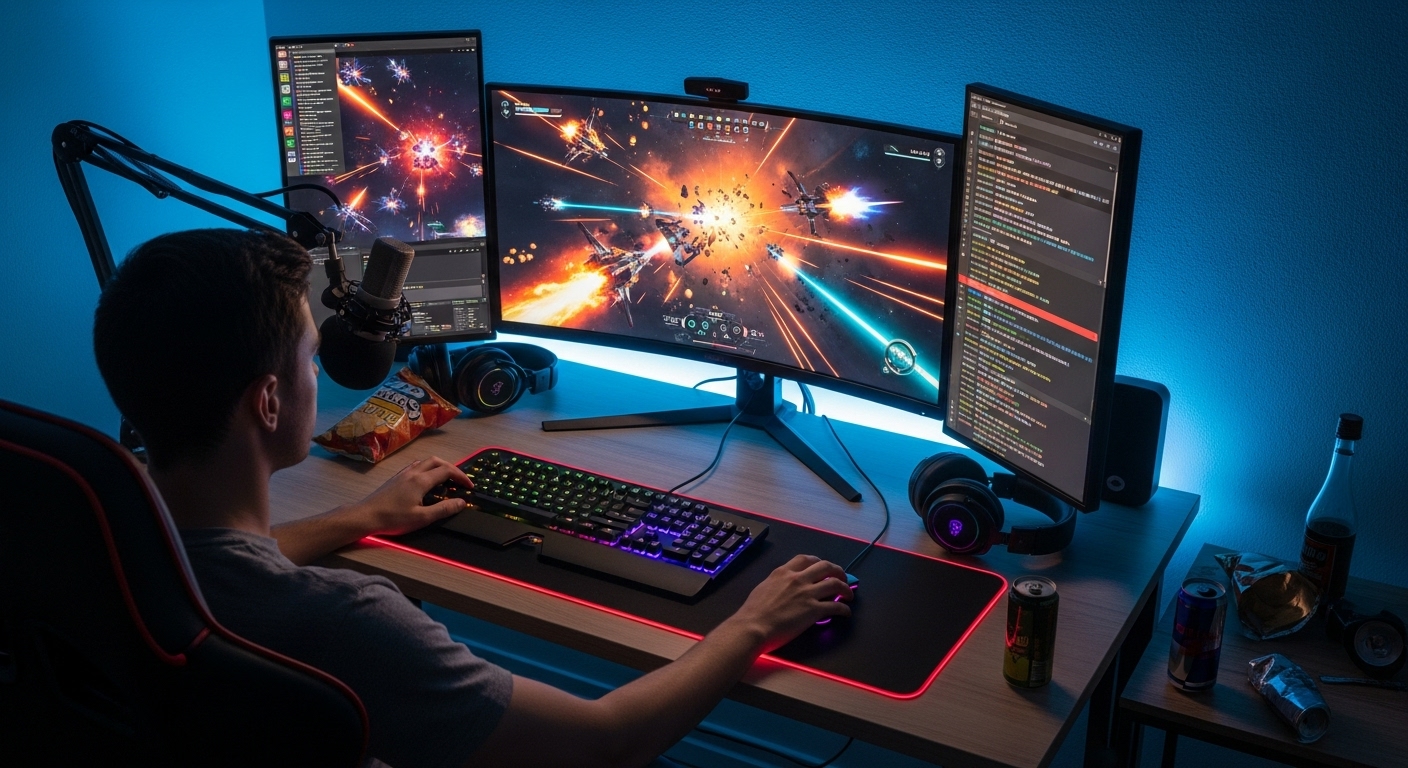
Gaming is no longer just a pastime or hobby—it has transformed into a dynamic, immersive experience that touches every corner of modern culture. From the days of arcade classics to the ever-expanding world of virtual reality, the gaming landscape has evolved significantly. Today, the industry is more than just entertainment; it’s a powerful medium for storytelling, competition, and social interaction. This blog post will delve into the transformative journey of gaming and explore what the future holds for this exciting and ever-changing industry.
The Humble Beginnings: From Pixels to Playable Worlds
In the 1970s and 1980s, gaming was just beginning to take shape. Arcade machines like Pong and Space Invaders were at the forefront, offering players a simple but engaging experience. These early games were driven by basic mechanics, yet they created the foundation for what would become a global phenomenon. The simplicity of these titles, coupled with the social aspect of arcade culture, made gaming an instant hit with a broad audience.
At the same time, home consoles began to emerge, bringing the arcade experience into living rooms. The Atari 2600, released in 1977, was one of the first consoles to offer interchangeable game cartridges, allowing players to enjoy a variety of titles at home. Though these early games were far from complex, they represented the start of a new form of entertainment that would grow and evolve over the next few decades.
The 3D Revolution: Expanding Horizons
The 1990s marked the beginning of a major leap forward in the gaming world: the introduction of 3D graphics. With the release of consoles like the Nintendo 64 and the Sony PlayStation, games began to explore new possibilities. Titles such as Super Mario 64 and The Legend of Zelda: Ocarina of Time demonstrated the potential of 3D environments, offering players expansive worlds to explore.
This shift in graphics opened the door to more immersive gameplay experiences. Players were no longer confined to linear, side-scrolling paths; they could navigate full 3D spaces, interact with the environment, and experience stories in a way that felt more personal and dynamic. The late 90s also saw the rise of the first-person shooter genre, with titles like Doom and GoldenEye 007 paving the way for competitive, action-packed gameplay.
Gaming Today: A Multi-Dimensional Experience
Fast forward to the present, and gaming has reached new heights of sophistication. Modern consoles like the PlayStation 5, Xbox Series X, and high-end PCs offer graphics and processing power that make virtual worlds almost indistinguishable from reality. Games like Red Dead Redemption 2, The Witcher 3, and Cyberpunk 2077 feature incredibly detailed open worlds where players can lose themselves for hours on end.
The narrative depth of today’s games has also seen immense growth. Where early titles were more about simple mechanics and high scores, contemporary games offer rich, branching storylines that rival the best films and novels. Players can make meaningful choices that impact the game world, giving them the freedom to shape their own experience. This evolution has made gaming a platform for storytelling in ways never before imagined.
The Rise of Online Gaming and eSports
One of the most significant developments in recent years has been the rise of online multiplayer gaming. No longer limited to solo experiences, modern games allow players to connect, compete, and collaborate with others from around the world. Games like Fortnite, League of Legends, and Overwatch have turned online multiplayer into a global social activity.
This shift has also paved the way for the growth of eSports. Competitive gaming has evolved into a massive industry, with professional gamers competing in tournaments for multi-million-dollar prizes. Esports has reached a level of prominence that rivals traditional sports, attracting millions of viewers and sponsors. Games like Dota 2 and Counter-Strike: Global Offensive have become staples of the eSports scene, while new titles continue to push the boundaries of competitive play.
Mobile Gaming: Gaming Everywhere, Anytime
In recent years, mobile gaming has become a dominant force in the industry. Smartphones and tablets have allowed players to enjoy games on the go, making gaming more accessible than ever before. Titles like Candy Crush, Pokémon Go, and Clash Royale have proven that mobile games can offer deep, engaging experiences without requiring expensive hardware.
Mobile gaming has introduced new genres and gameplay mechanics, such as location-based gaming in Pokémon Go or the rise of battle royale-style games like PUBG Mobile. These innovations have brought gaming to a wider audience, including those who might not traditionally consider themselves gamers. With the rise of 5G technology and more powerful mobile devices, the future of mobile gaming looks even more promising.
Virtual Reality: Stepping Into the Game
Perhaps the most exciting development in recent years is the rise of virtual reality (VR) gaming. VR offers players the chance to immerse themselves fully in digital worlds, stepping beyond the confines of a screen and into a completely interactive environment. With headsets like the Oculus Rift, HTC Vive, and PlayStation VR, players can experience games in ways that were once only imagined in science fiction.
The potential of VR is vast, allowing for deeper immersion and more interactive experiences. Games like Beat Saber and Half-Life: Alyx have already demonstrated how VR can create unique and engaging gameplay experiences. Whether it’s fighting off enemies, solving puzzles, or exploring fantastical landscapes, VR is opening up new possibilities for how we experience gaming.
The Future of Gaming: AI, Cloud Gaming, and the Metaverse
Looking ahead, the future of gaming is filled with exciting possibilities. Artificial intelligence (AI) is expected to play a bigger role in creating more dynamic, responsive worlds. NPCs (non-playable characters) will become more intelligent, offering players more complex interactions and behaviors that adapt to their actions. This could lead to more personalized experiences, where every playthrough feels unique.
Cloud gaming is another technology that will likely shape the future. With cloud platforms like Google Stadia and Xbox Cloud Gaming, players can stream high-quality games to any device without the need for powerful hardware. This could democratize access to gaming, allowing anyone with a stable internet connection to enjoy the latest titles, regardless of their device.
The concept of the Metaverse, a shared virtual world where people can interact, work, and play, is also gaining traction. While we are still in the early stages of this digital universe, companies are investing heavily in creating interconnected virtual spaces where gaming, social interaction, and even commerce will merge. As this technology matures, it could revolutionize how we connect and engage with digital environments.
Conclusion: A Limitless Future
Gaming has come a long way since the early days of arcades and 2D graphics. Today, it’s an industry that spans genres, cultures, and platforms, offering experiences that are more immersive and diverse than ever before. With advancements in virtual reality, artificial intelligence, and cloud gaming, the future of gaming promises even more groundbreaking developments. Whether you’re exploring vast open worlds, competing in esports, or stepping into a VR universe, the world of gaming is rapidly evolving, and the journey is far from over. The best part? We’re all part of it.