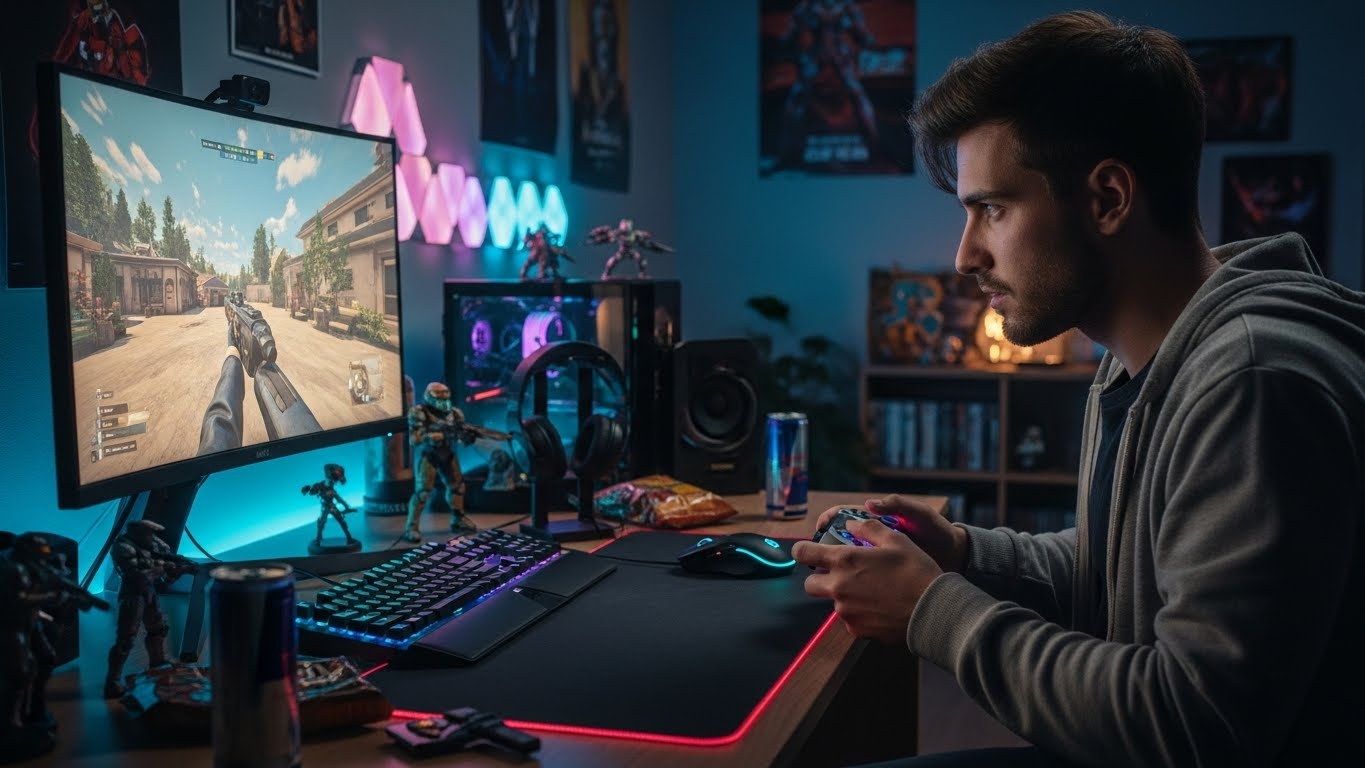

Gaming has evolved drastically over the years, transforming from basic 8-bit graphics to immersive, cinematic worlds with cutting-edge technology. Whether you’re a seasoned gamer or someone just getting into the world of gaming, there’s no denying that the industry has changed in ways we could never have imagined a few decades ago. In this blog post, we’ll explore the history, the impact, and the future of gaming. Along the way, we’ll dive into the key factors that have shaped the gaming landscape, from technology advancements to societal shifts.
The Early Days of Gaming: From Arcades to Consoles
The story of modern gaming begins in the 1970s. Back then, video games were far from the complex worlds we know today. Simple arcade games like Pong and Space Invaders took the world by storm. These early games were designed to be played in public spaces like arcades, where players would pay a small fee to participate in a few minutes of gameplay.
In the late 1970s and early 1980s, home consoles like the Atari 2600 emerged, allowing players to enjoy gaming in the comfort of their own homes. However, the graphics were still basic by today’s standards, and the gameplay was rudimentary. These early systems, though primitive, set the foundation for the gaming culture that would follow. The introduction of cartridges allowed players to experience a variety of games, which sparked interest in home gaming consoles.
The Rise of 3D Graphics and CD-ROM Technology
The 1990s marked a significant turning point in the gaming industry. This was the decade when 3D graphics became mainstream, and CD-ROM technology opened up new possibilities. The launch of Sony PlayStation in 1994 and Nintendo 64 in 1996 forever changed the landscape of gaming. No longer limited to 2D sprites and pixelated environments, games could now offer expansive, three-dimensional worlds.
With the arrival of these consoles, we saw the birth of iconic franchises like Gran Turismo, Super Mario 64, and The Legend of Zelda: Ocarina of Time. These games pushed the boundaries of what was possible with technology at the time, featuring fully realized worlds with detailed environments, complex narratives, and immersive gameplay. The use of CD-ROMs also allowed developers to include high-quality music, voice acting, and cinematic cutscenes, elevating the narrative experience.
Online Gaming: Connecting the World
The 2000s brought with it the rise of online gaming, a trend that would fundamentally reshape how we engage with video games. No longer confined to local multiplayer sessions, players could now connect with others around the world in real-time. The introduction of broadband internet and services like Xbox Live and PlayStation Network allowed players to join massive online communities and play games like Halo 2, World of Warcraft, and Call of Duty with others across the globe.
Online multiplayer games became a new genre of their own, and the emergence of massive online worlds allowed players to create avatars, join factions, and explore vast digital landscapes. The rise of eSports also began during this period, with competitive gaming becoming a global phenomenon. In addition to multiplayer games, online services allowed for the download of digital content, expanding gaming libraries and enabling developers to provide regular updates, patches, and downloadable content (DLC).
The Impact of Mobile Gaming
As smartphones became more powerful, mobile gaming emerged as a dominant force in the industry. Games like Angry Birds, Candy Crush, and Pokémon Go demonstrated that gaming wasn’t confined to just consoles and PCs. In fact, mobile gaming has become one of the most accessible forms of entertainment, reaching millions of people who may not have traditionally considered themselves gamers.
With the rise of app stores, developers could now easily distribute their games to a global audience. The simplicity of mobile games, combined with their accessibility, has attracted people of all ages and backgrounds. Whether it’s casual puzzle games or augmented reality experiences, mobile gaming has changed the way people perceive and engage with video games. And with the continued growth of smartphones, mobile gaming will only continue to grow in prominence.
Virtual Reality and Augmented Reality: The Next Frontier
The next significant leap in gaming technology came with the rise of virtual reality (VR) and augmented reality (AR). VR, in particular, aims to immerse players in entirely virtual worlds, offering a more lifelike experience than traditional gaming. Devices like the Oculus Rift, PlayStation VR, and HTC Vive have allowed gamers to step into their favorite games in ways that were once the stuff of science fiction.
Unlike traditional gaming, VR requires specialized hardware like headsets, controllers, and motion sensors to track the player’s movements. This creates a fully immersive experience, where players can look around and interact with their surroundings in real-time. While VR gaming is still in its early stages, it has the potential to revolutionize the way we play games, offering an experience that’s more akin to a digital theme park than a typical video game.
Augmented reality (AR) takes a slightly different approach. Rather than fully immersing players in virtual worlds, AR blends the real world with digital elements. Games like Pokémon Go and Ingress have demonstrated how AR can be used to create engaging, location-based experiences. As AR technology continues to evolve, we may see even more advanced gaming experiences that merge the physical and digital worlds.
The Rise of Indie Games and Crowdfunding
In recent years, the rise of indie games has been one of the most exciting trends in the gaming industry. Independent developers are no longer dependent on major publishers to get their games out into the world. Thanks to platforms like Steam and Itch.io, indie developers can release their games directly to the public, bypassing traditional gatekeepers. This democratization of game development has led to a surge of creativity and innovation.
Additionally, crowdfunding platforms like Kickstarter and Indiegogo have allowed independent developers to fund their projects by connecting directly with their fanbase. Games like Shovel Knight, Hollow Knight, and Undertale were all funded through crowdfunding, and their success proves that there’s a demand for fresh, unique gaming experiences that break away from the traditional, formulaic approach of big-budget titles.
The indie game movement has not only brought us innovative gameplay but has also introduced a new wave of storytelling, focusing on unique narratives and personal experiences. Games like Celeste and Night in the Woods tackle mental health, social issues, and existential questions in ways that are both moving and thought-provoking.
The Future of Gaming: What’s Next?
The future of gaming looks brighter than ever. With continuous advancements in technology, gaming will continue to evolve in ways that we can only begin to imagine. Cloud gaming is poised to change the industry by making high-quality gaming more accessible. With platforms like Google Stadia and Microsoft’s xCloud, gamers can play console-quality games on a variety of devices, from smartphones to low-end PCs, without the need for expensive hardware.
Additionally, artificial intelligence (AI) will play a huge role in the future of gaming. AI could lead to smarter non-playable characters (NPCs), more dynamic and responsive gameplay, and even personalized gaming experiences. Imagine a game that adapts to your playstyle and narrative choices in real-time, creating a truly unique adventure every time you play.
Furthermore, blockchain technology and NFTs could introduce new forms of ownership and monetization in the gaming industry. Players might be able to truly own their in-game assets, such as skins, weapons, or even entire characters, and trade them on digital marketplaces.
Finally, we can’t ignore the role of gaming culture in shaping the future of the industry. Gaming is no longer just a hobby; it’s a global cultural phenomenon that spans across generations. The rise of streaming platforms like Twitch and YouTube has turned gaming into a form of entertainment that millions of people watch daily. Competitive gaming, in the form of eSports, has grown into a multi-billion-dollar industry, and gaming conventions like E3 and PAX are some of the most anticipated events in the entertainment world.
Conclusion: Gaming Is Here to Stay
As gaming continues to evolve, one thing is clear: it’s here to stay. From the humble beginnings of Pong to the hyper-realistic worlds of today, gaming has come a long way. It’s no longer just a pastime but a global culture that transcends age, gender, and background. Whether it’s on a console, a PC, a mobile device, or through a VR headset, gaming offers something for everyone.
The future is incredibly exciting, with new technologies, new experiences, and new forms of storytelling on the horizon. As we continue to push the boundaries of what gaming can be, one thing is certain – the gaming world will continue to evolve, surprise, and inspire us for years to come.