
Introduction: Gaming as a Cultural Phenomenon
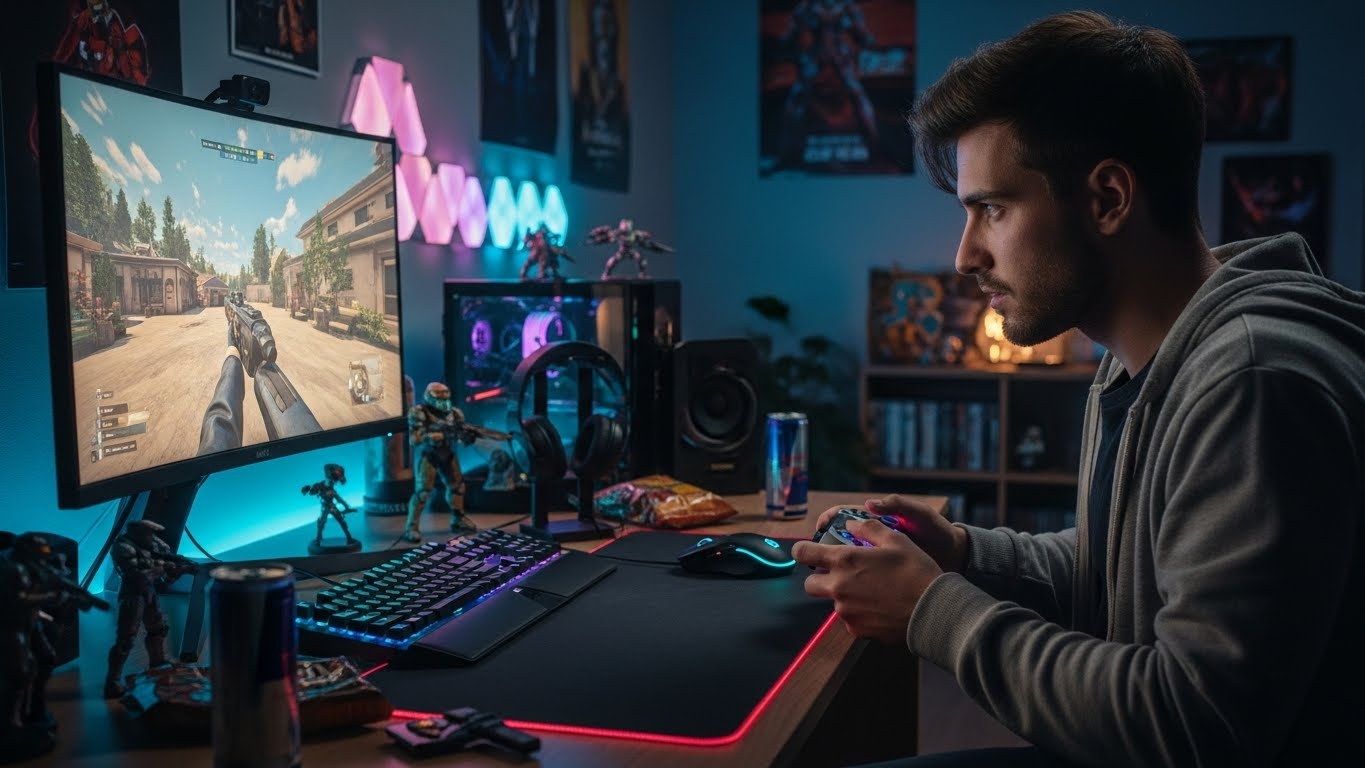
Gaming has evolved from a niche hobby to a global cultural force. What began as simple arcade games and early console titles has grown into a multi-billion-dollar industry that shapes entertainment, technology, and even social interaction. Gaming is no longer just a form of play—it has become a medium for storytelling, creativity, competition, and education. With millions of players worldwide and professional esports leagues, gaming now rivals traditional entertainment forms like movies and sports. Its influence extends into pop culture, technology development, and even mental health, making it a central component of modern life.
The Origins of Gaming: From Arcades to Home Consoles
The history of gaming began in the 1970s with early arcade machines like “Pong” and “Space Invaders,” which offered simple yet addictive gameplay. These games captured the imagination of players and set the stage for competitive and social gaming experiences.
In the 1980s and 1990s, home consoles such as the Nintendo Entertainment System and Sega Genesis brought gaming into living rooms, making it accessible to a wider audience. These consoles introduced iconic franchises that remain relevant today, laying the foundation for immersive storytelling, exploration, and competition. Early gaming emphasized high scores, strategy, and replayability, creating communities around shared challenges and achievements.
Modern Gaming: Immersive Worlds and Advanced Mechanics
Contemporary games offer experiences far beyond the simple mechanics of early titles. Modern gaming is defined by expansive open worlds, realistic graphics, and complex gameplay systems. Players can explore detailed environments, interact with intelligent characters, and make choices that influence the narrative.
Games like “The Witcher 3: Wild Hunt,” “Red Dead Redemption 2,” and “Elden Ring” provide immersive experiences where player decisions shape the story. Advanced mechanics, such as realistic physics, AI-driven behaviors, and dynamic environmental systems, create worlds that feel alive and responsive. This evolution demonstrates how gaming has become a sophisticated medium for interactive storytelling and player engagement.
Storytelling in Games: Interactive Narratives
One of the unique aspects of gaming is its ability to tell stories interactively. Unlike movies or books, games allow players to influence outcomes, creating personal connections with the narrative. Choices made by players can determine character fates, story endings, and even the moral direction of the game world.
Games such as “Life is Strange,” “Detroit: Become Human,” and “The Last of Us” showcase how gaming can explore complex themes like morality, identity, and human relationships. The interactivity of games allows players to experience consequences firsthand, making the storytelling experience more engaging and emotionally impactful than passive forms of media.
Gaming as a Social Experience
Gaming is no longer a solitary activity; it has become a social phenomenon. Online multiplayer games connect millions of players globally, fostering collaboration, competition, and community. Games like “Fortnite,” “Minecraft,” and “Among Us” encourage teamwork, strategy, and social interaction, allowing players to form friendships and communities.
Beyond gameplay, streaming platforms and content creation have expanded the social aspect of gaming. Players share experiences, tutorials, and live gameplay with audiences worldwide, creating a participatory culture where interaction and community engagement are central. Gaming has become a medium for social connection, bridging geographic and cultural boundaries.
Competitive Gaming and Esports
Esports has transformed gaming into a professional arena, attracting elite players, dedicated teams, and millions of viewers. Esports tournaments, including games like “League of Legends,” “Counter-Strike: Global Offensive,” and “Dota 2,” offer substantial prize pools and sponsorship opportunities.
Professional players train rigorously, dedicating hours each day to skill development, strategy, and team coordination. Coaches, analysts, and content creators support these athletes, creating a professional ecosystem comparable to traditional sports. The rise of esports highlights gaming’s potential as a career path and demonstrates the level of dedication and professionalism required at the highest levels of competitive play.
Creativity and Gaming
Modern games encourage creativity, allowing players to build, design, and experiment within virtual worlds. Sandbox games like “Minecraft” and platforms such as “Roblox” empower players to create custom environments, game modes, and narratives. This creative freedom transforms gaming from a consumable experience into a participatory art form.
Indie developers also contribute to innovation by producing unique and experimental games that challenge traditional mechanics and storytelling conventions. Games like “Stardew Valley” and “Hollow Knight” showcase creativity and depth, emphasizing that gaming is both a form of art and entertainment.
Educational and Cognitive Benefits of Gaming
Gaming offers numerous cognitive and educational benefits. Strategy games, puzzles, and simulations develop critical thinking, problem-solving, and decision-making skills. Multiplayer games enhance teamwork, communication, and leadership abilities.
Educational games introduce players to history, science, mathematics, and language in interactive and engaging ways. Even mainstream entertainment games often require resource management, planning, and adaptive thinking. Research shows that gaming can improve memory, attention, and coordination, making it a valuable tool for cognitive development.
Technology Driving Gaming Innovation
Advancements in technology continue to expand the possibilities of gaming. Virtual reality (VR) and augmented reality (AR) offer immersive experiences, allowing players to feel fully present within the game world. Cloud gaming eliminates hardware barriers, enabling access to high-quality games on various devices without expensive consoles or PCs.
Artificial intelligence enhances gameplay, creating adaptive challenges, smarter non-player characters, and personalized experiences. Graphics engines, motion capture, and sound design contribute to realistic and engaging environments. Technology ensures that gaming continues to evolve, offering experiences that are increasingly immersive, interactive, and accessible.
Health and Balance in Gaming
While gaming provides numerous benefits, balance and responsible play are essential. Excessive gaming can lead to physical strain, disrupted sleep patterns, and social isolation. Proper ergonomics, exercise, and time management are crucial for maintaining physical and mental well-being.
Mental health is also an important consideration. Gaming can offer stress relief, social connection, and cognitive stimulation, but excessive immersion or unhealthy competition may create anxiety or burnout. Approaching gaming mindfully ensures that it remains a positive and enriching activity.
Gaming as a Cultural Force
Gaming has become a major cultural influence, impacting art, music, fashion, and media. Popular games inspire fan art, cosplay, streaming channels, and social media trends. Gaming communities shape digital culture, creating shared narratives, inside jokes, and fandom traditions.
Games also address social and ethical themes, encouraging players to reflect on morality, diversity, and societal issues. As a cultural medium, gaming engages audiences in ways that traditional entertainment cannot, blending creativity, interactivity, and reflection.
The Future of Gaming
The future of gaming is poised for continued growth and innovation. Emerging technologies like VR, AR, cloud gaming, and AI will create increasingly immersive and interactive experiences. Cross-platform play and online ecosystems will make gaming more accessible and socially integrated.
Gaming will continue to influence education, entertainment, and culture. Adaptive experiences, global collaboration, and creative participation will redefine what it means to play, compete, and connect in digital spaces. As technology and creativity merge, gaming will remain at the forefront of cultural and technological innovation.
Conclusion: Gaming Beyond Entertainment
Gaming has grown into a dynamic medium that extends far beyond simple amusement. It combines creativity, competition, storytelling, social connection, and technological innovation. From immersive narratives and professional esports to educational opportunities and cultural influence, gaming shapes how people interact with technology and each other.
In modern society, gaming is not just a pastime—it is a transformative force that engages minds, inspires creativity, and connects communities. Its evolution reflects broader cultural and technological trends, demonstrating that gaming is both a reflection of contemporary life and a driver of future innovation. As gaming continues to evolve, it will remain a central element of entertainment, culture, and human connection.