
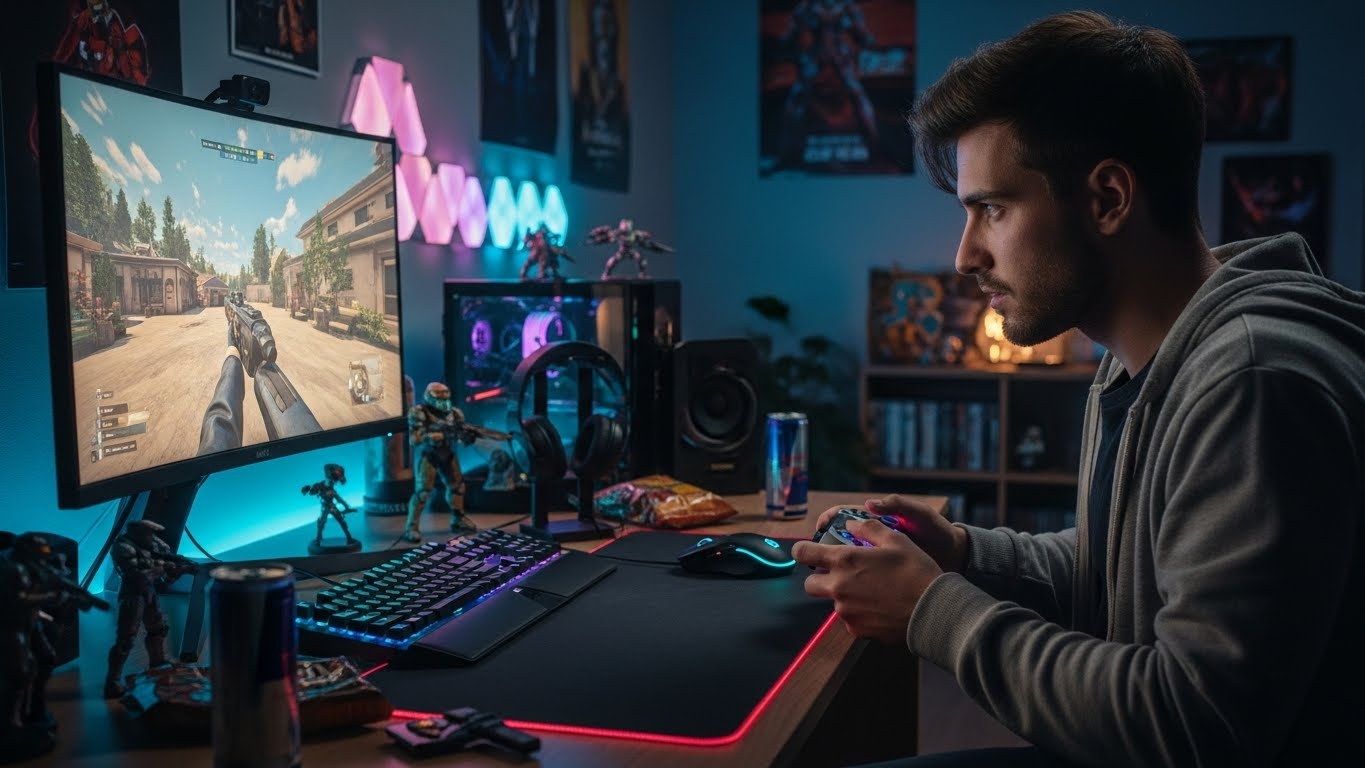
Introduction: The World of Gaming
Gaming is no longer just a pastime; it has become a cultural phenomenon that captivates millions of people worldwide. From the early days of simple arcade machines to the current era of photorealistic virtual realities, gaming has grown into an art form, a social platform, and even a career for some. The appeal of gaming lies in its ability to entertain, challenge, and connect people across diverse backgrounds. Understanding the evolution, impact, and future of gaming helps us appreciate why it has become a cornerstone of modern entertainment.
The Early Days of Gaming
The history of gaming dates back to the 1970s when arcade machines and home consoles like Pong and Atari 2600 were first introduced. These games were simple, often involving basic mechanics such as moving a paddle or shooting targets. Despite their simplicity, they captured the imagination of players and laid the foundation for the gaming industry. During this era, games were more about fun and experimentation than storytelling or graphics. Social gaming also began with local multiplayer experiences, where friends and families gathered around a single machine, sharing in the thrill of competition.
The Rise of Home Consoles
The 1980s and 1990s marked a significant shift in gaming as home consoles became mainstream. Nintendo, Sega, and Sony emerged as dominant players, introducing games with more complex narratives, colorful graphics, and memorable characters. Iconic titles like Super Mario, Sonic the Hedgehog, and The Legend of Zelda set new standards for gameplay and creativity. Home consoles allowed players to immerse themselves in gaming without leaving their living rooms, leading to the rise of dedicated fan communities and increased social interaction within the gaming world.
The Impact of Personal Computers
While consoles provided convenience, personal computers opened new dimensions in gaming. PCs offered more processing power, better graphics, and the ability to mod games, allowing players to customize their experiences. Genres like real-time strategy, simulation, and first-person shooters flourished on PCs, with games such as Warcraft, SimCity, and Doom paving the way. Additionally, online multiplayer gaming began to gain popularity, connecting players across cities and countries. This era marked the beginning of competitive gaming, where skill, strategy, and teamwork became central to the experience.
Gaming as a Social Platform
In today’s world, gaming is more than just a solo activity; it is a social platform that brings people together. Online multiplayer games like Fortnite, Call of Duty, and Minecraft allow players to interact, collaborate, and compete with friends or strangers globally. Social interaction within games has expanded to include live streaming, esports tournaments, and community-driven content creation. Players not only enjoy the gameplay but also participate in a shared cultural experience, discussing strategies, sharing creations, and celebrating achievements together. Gaming communities have become vibrant spaces for social connection, fostering friendships that often extend beyond the digital realm.
The Growth of Esports
Esports has transformed gaming from a hobby into a professional career. Competitive gaming tournaments attract millions of viewers, offering substantial prize pools and sponsorship deals. Games like League of Legends, Dota 2, and Counter-Strike have become central to the esports scene, with professional teams, coaches, and analysts contributing to the sport’s ecosystem. Esports has also influenced mainstream media, leading to dedicated TV channels, streaming platforms, and global events. For many, watching esports is as engaging as playing games themselves, highlighting the cultural significance of competitive gaming.
The Role of Storytelling in Modern Games
Modern gaming has evolved into a storytelling medium rivaling books and movies. Developers create immersive worlds with intricate plots, complex characters, and moral dilemmas that engage players on multiple levels. Titles like The Last of Us, Red Dead Redemption, and The Witcher series showcase how games can elicit emotional responses, encourage critical thinking, and provide a sense of agency. Storytelling in games also allows for interactive experiences, where player choices can influence the narrative and lead to multiple endings. This level of engagement makes gaming a unique art form capable of blending entertainment with meaningful experiences.
Virtual Reality and Immersive Experiences
Virtual reality (VR) and augmented reality (AR) have taken gaming immersion to unprecedented levels. VR headsets and motion controllers allow players to step directly into digital worlds, interacting with environments in ways previously impossible. Games like Beat Saber and Half-Life: Alyx demonstrate the potential of VR to combine physical activity with digital gameplay. AR games like Pokémon Go blend real-world environments with virtual elements, creating experiences that encourage exploration and social interaction. The rise of immersive technologies is pushing the boundaries of what gaming can achieve, making experiences more engaging, realistic, and memorable.
The Psychological Benefits of Gaming
Gaming is not just entertainment; it can also provide cognitive and psychological benefits. Strategic games improve problem-solving skills, decision-making, and resource management. Multiplayer and cooperative games enhance communication, teamwork, and social bonding. Additionally, gaming can serve as a stress reliever, offering players an escape from daily pressures and an outlet for creativity. Research suggests that moderate gaming can improve focus, memory, and mental flexibility. However, maintaining a healthy balance is crucial, as excessive gaming can lead to negative consequences such as social isolation or physical strain.
The Economic Impact of Gaming
The gaming industry has become a major economic force, generating billions of dollars annually. Revenue comes from game sales, in-game purchases, subscriptions, merchandise, and esports events. The growth of mobile gaming has further expanded the market, making games accessible to millions of people who may not own consoles or high-end PCs. The industry also drives technological innovation, influencing advancements in graphics, artificial intelligence, and network infrastructure. With job opportunities ranging from game development to content creation, the economic significance of gaming is undeniable, shaping both culture and commerce.
The Future of Gaming
The future of gaming promises continued innovation and expansion. Cloud gaming will make high-quality games accessible on virtually any device, reducing hardware limitations. Artificial intelligence will create more dynamic and responsive game worlds, where NPCs behave intelligently and adapt to player actions. Social and cooperative experiences will continue to evolve, with virtual spaces becoming hubs for interaction, creativity, and entertainment. Additionally, gaming is likely to integrate more with other forms of media, blending movies, music, and literature into interactive experiences. As technology progresses, gaming will become an even more immersive, inclusive, and influential aspect of human culture.
Conclusion: Gaming as a Cultural Phenomenon
Gaming has come a long way from its humble beginnings as simple pixelated fun. It has grown into a multifaceted cultural phenomenon that entertains, educates, and connects people worldwide. From storytelling and social interaction to professional esports and immersive realities, gaming continues to redefine what entertainment means in the modern age. As technology advances and creativity flourishes, the possibilities for gaming are limitless. Embracing gaming as both a hobby and a cultural force allows us to appreciate its depth, impact, and potential for the future.