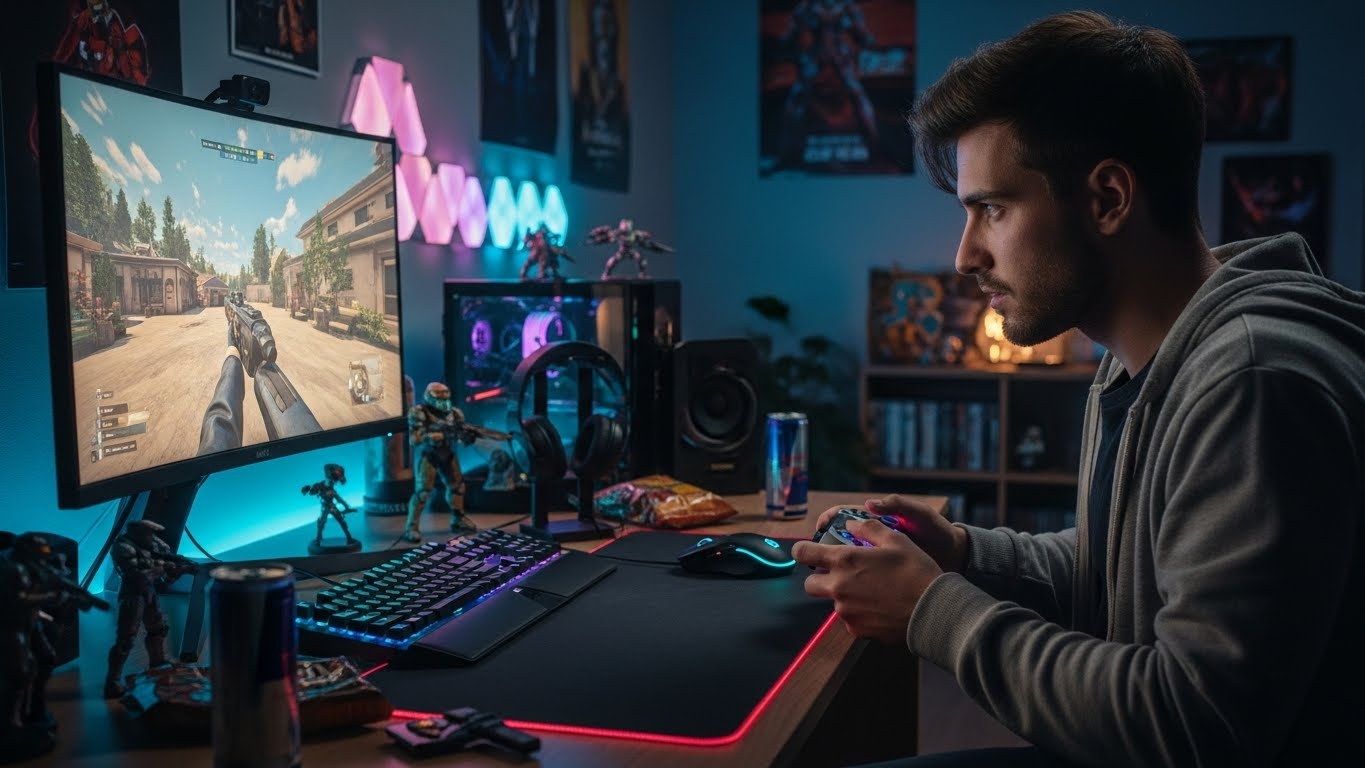

Gaming has transformed dramatically over the past few decades. What began as a simple form of entertainment for a niche group of enthusiasts has now become a global phenomenon influencing culture, technology, education, and social interaction. Video games are no longer just a pastime—they are an industry, an art form, and a platform for social connection and competition. This blog explores the evolution of gaming, its impact on players and society, the economic and technological influences, as well as the challenges and future possibilities in this vibrant industry.
The Evolution of Gaming
The history of gaming dates back to the early 1970s with the creation of arcade machines and simple home consoles. Games like Pong, Space Invaders, and Pac-Man introduced players to interactive digital entertainment, laying the groundwork for an industry that would grow exponentially. The 1980s and 1990s saw the rise of home consoles such as the Nintendo Entertainment System and Sega Genesis, offering more sophisticated gameplay and graphics.
PC gaming also emerged as a significant platform, with titles like Doom, Warcraft, and StarCraft redefining the concept of multiplayer experiences and competitive gaming. The development of online connectivity in the late 1990s and early 2000s enabled players to connect globally, transforming gaming from an isolated activity into a social experience. Today, gaming spans consoles, PCs, mobile devices, and virtual reality platforms, reaching billions of people worldwide.
Gaming as a Form of Entertainment
Gaming offers a unique form of interactive entertainment that combines storytelling, strategy, and sensory engagement. Unlike passive media like movies or television, video games actively involve players, giving them control over characters, storylines, and outcomes. This interactivity creates a level of immersion and personal investment that is unparalleled in other forms of entertainment.
Modern games span a wide array of genres, including role-playing games, first-person shooters, strategy games, sports simulations, and narrative-driven adventures. Each genre appeals to different audiences, providing endless options for engagement, challenge, and creativity. As technology evolves, so does the ability to craft immersive worlds that captivate players for hours, sometimes even creating lifelong communities around shared gaming experiences.
The Social and Cultural Impact of Gaming
Gaming has become an important cultural and social phenomenon. Online multiplayer games allow players to collaborate or compete with others worldwide, creating strong social networks and communities. Many gamers form friendships, participate in guilds or clans, and engage in events or tournaments that foster teamwork, leadership, and communication skills.
Gaming culture has also influenced mainstream media, fashion, music, and art. Popular game franchises inspire movies, TV series, merchandise, and fan art, while cosplay and conventions allow fans to celebrate their favorite characters and experiences. The rise of streaming platforms has further amplified gaming culture, turning players into influencers and allowing millions of viewers to experience games in real time, shaping trends and cultural conversations globally.
Economic Significance of Gaming
The gaming industry is now one of the largest entertainment sectors in the world, generating billions of dollars annually. Professional esports tournaments, game sales, downloadable content, and microtransactions contribute to this massive economic footprint. The rise of mobile gaming has made the industry more accessible than ever, enabling widespread participation and consumption.
Beyond game sales, the gaming economy supports careers in game design, programming, storytelling, animation, marketing, event management, and content creation. Professional players and streamers also earn substantial income through tournament winnings, sponsorships, and streaming revenue. The industry’s growth continues to drive innovation and investment, demonstrating the economic power of gaming in the modern world.
Gaming and Technology
Technology has been central to the evolution and growth of gaming. Advancements in graphics, processing power, and artificial intelligence have allowed developers to create more immersive and complex gaming experiences. Virtual reality and augmented reality are transforming how players interact with games, providing full-body engagement and enhanced sensory immersion.
Cloud gaming and mobile platforms have made games more accessible, reducing the barriers of hardware requirements. Artificial intelligence has enhanced gameplay by creating more intelligent opponents and dynamic game worlds. These technological innovations not only improve entertainment value but also expand the ways gaming can be used for learning, simulation, and creative expression.
Cognitive and Educational Benefits of Gaming
Contrary to the stereotype that gaming is purely recreational, research shows that gaming can have cognitive and educational benefits. Many games improve problem-solving skills, strategic thinking, multitasking, and hand-eye coordination. Puzzle games, strategy titles, and role-playing games encourage players to think critically and make decisions under pressure.
Educational games and simulations are being used to teach subjects ranging from history and mathematics to coding and engineering. Gamified learning motivates students through rewards, challenges, and interactive experiences, demonstrating how gaming principles can enhance engagement and retention. The educational potential of gaming continues to expand as technology advances.
The Rise of Esports
Esports, or competitive gaming, has emerged as a major component of the gaming ecosystem. Professional players, teams, and leagues compete in organized tournaments for substantial prize pools and recognition. Games like League of Legends, Dota 2, Fortnite, and Counter-Strike have become household names in the esports world.
Esports has created a professional career path for talented gamers, providing income, sponsorships, and global exposure. It has also fostered a new form of spectator entertainment, where audiences watch live tournaments online or in stadiums. Esports demonstrates that gaming can be both a competitive sport and a source of community, bridging traditional entertainment and professional athletics.
Challenges Facing the Gaming Industry
Despite its growth, the gaming industry faces several challenges. Concerns about gaming addiction, mental health, and excessive screen time are prevalent. Long hours of gameplay can lead to physical strain, social isolation, and disrupted sleep patterns, making balance and moderation essential for healthy gaming habits.
Inclusivity is another ongoing challenge. Women, minorities, and differently-abled players are underrepresented in professional gaming, often facing barriers to participation and recognition. Toxicity and harassment in online communities remain issues that the industry is actively addressing through improved moderation, reporting systems, and awareness campaigns. Game developers, communities, and players must work together to create safe, inclusive, and positive environments.
The Future of Gaming
The future of gaming is full of possibilities. Advances in artificial intelligence, cloud computing, virtual reality, and augmented reality will create even more immersive and interactive experiences. Games will continue to integrate social, educational, and creative elements, blurring the lines between entertainment, learning, and social engagement.
Cross-platform play, mobile innovation, and cloud gaming will make games accessible to larger audiences, reducing barriers and fostering global communities. Gamification principles will expand into other industries, including education, healthcare, and business, demonstrating how gaming concepts can enhance engagement and productivity. The gaming industry is poised to remain at the forefront of technological innovation and cultural influence for years to come.
Gaming and Personal Development
Gaming can contribute to personal growth when approached thoughtfully. Many games encourage goal-setting, strategic planning, and perseverance. Players learn to handle failure, adapt to changing circumstances, and collaborate with teammates to achieve objectives.
Gaming can also foster creativity and innovation. Sandbox and simulation games, for example, allow players to build worlds, solve challenges creatively, and experiment with new ideas. Social interactions in multiplayer games develop communication and leadership skills, while competitive gameplay enhances focus, patience, and resilience. Gaming, when balanced with other aspects of life, can be a powerful tool for personal development.
Gaming as a Social Connector
Beyond individual benefits, gaming connects people across the globe. Multiplayer online games, virtual worlds, and gaming communities enable players to form friendships, collaborate on challenges, and participate in shared experiences. Online events, tournaments, and conventions further strengthen the sense of belonging and community among gamers.
Gaming transcends geographical and cultural barriers, allowing people from different backgrounds to communicate, cooperate, and compete. This social aspect of gaming highlights its potential as a unifying force, fostering global understanding and collaboration in ways few other activities can achieve.
Conclusion: Gaming as a Force for Innovation and Connection
Gaming has grown into a multifaceted industry that impacts entertainment, culture, technology, and society. It offers cognitive, educational, and social benefits while driving innovation in software, hardware, and interactive media. Despite challenges related to addiction, inclusivity, and online toxicity, gaming continues to expand as a global phenomenon, influencing the way we work, learn, and connect.
As technology evolves, gaming will continue to push the boundaries of creativity, interactivity, and social engagement. From immersive storytelling to competitive esports and educational applications, gaming has become a transformative force that shapes modern culture, connects people worldwide, and offers new opportunities for personal and professional growth. It is clear that gaming is far more than entertainment—it is a dynamic and influential part of human life, inspiring innovation, collaboration, and imagination on a global scale.